

At its core, the Great Commission exists because Jesus loves people—not just one race, nation, class, or culture, but all people. His desire is for everyone to know Him and become part of His family. This truth is woven throughout the life and ministry of Jesus and remains the heartbeat of our mission as Southern Baptists.
For the past 100 years, countless faithful voices have shaped the story of the Cooperative Program and the impact of Southern Baptist churches. Their vision, sacrifice, and leadership have fueled a movement that has taken the gospel to communities near and far, trained generations of pastors and missionaries, and strengthened churches to stand boldly in their calling.
As we celebrate the Centennial of the Cooperative Program, we pause to honor those who came before us—the pioneers, leaders, and servants whose faithfulness has carried this mission forward. Their stories remind us of what is possible when Southern Baptists work together for the sake of the gospel.
We invite you to explore the lives of these trailblazers of cooperation—those whose voices have shaped who we are today and whose legacy challenges us to press forward into the future, united in our calling to reach the world for Christ.
Austin Crouch
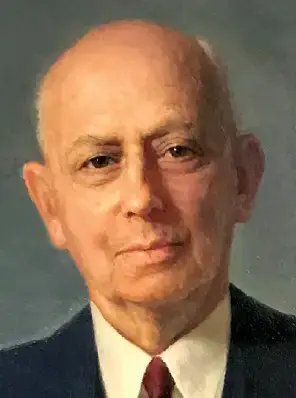
Meet Austin Crouch
Greetings, friends. Allow me to introduce myself. My name is Austin Crouch. Though my name may not be widely known today, during my lifetime, I sought to faithfully serve the Lord and my fellow Baptists in a variety of ways. My journey as a pastor and leader spanned decades and took me to five different states, but the heart of my ministry often found its home in Murfreesboro, Tennessee.
I had the privilege of shepherding the Murfreesboro Baptist Church twice, first from 1912 to 1919 and then again from 1923 to 1927. During those years, the Lord blessed our efforts, and the church flourished. In my final year there, with a membership of around 800, we celebrated 191 baptisms—a testament to the Spirit’s work among us.
Beyond the local church, I devoted myself to the broader ministry of Tennessee Baptists. In 1918, I chaired what became known as the “Committee of Nine.” Our task was to evaluate how Tennessee Baptists could better organize their ministries. The report we presented laid the foundation for a new structure that has guided cooperative ministry in our state for more than a century.
In 1925, I found myself drawn to the challenges facing Southern Baptists at the national level. That year, I proposed the creation of a Business Efficiency Committee to address financial and organizational concerns within the Southern Baptist Convention (SBC). Two years later, I was humbled to be chosen as the first executive secretary of the SBC Executive Committee. This role gave me the opportunity to guide the Convention through some of its most turbulent times—the Great Depression, the aftermath of the $75 Million Campaign, and World War II.
It wasn’t easy. The SBC faced staggering debt and uncertainty. But God was faithful, and He equipped us with wisdom, vision, and perseverance. My goal was always to lead with integrity and to encourage unity among our churches. By God’s grace, we established the Cooperative Program, bringing greater stability and focus to our shared mission.
After nearly 20 years in that role, I retired in 1946 following the loss of my dear wife. Yet, my ministry didn’t end there. I continued to teach, preach, and write, striving to use every gift the Lord had given me until my final days.
Reflecting on my life, I’m reminded of the Apostle Peter’s exhortation: “As each one has received a special gift, employ it in serving one another as good stewards of the multifaceted grace of God” (1 Peter 4:10 NASB). My journey was never about personal recognition—it was about faithfulness to the call.
Today, as you reflect on your own life and ministry, I encourage you to consider the gifts God has entrusted to you. Whether your role seems large or small, know that it is significant in His Kingdom. Serve well. Lead well. And above all, finish well.
Thank you, and may God bless you as you follow His calling.
Charles Culpepper
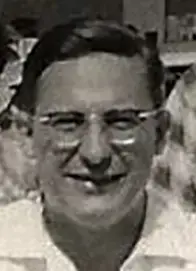
Meet Charles Culpepper
My name is Charles L. Culpepper, Sr., but most people called me Dr. Charlie. I was born in 1895, and my life has been a journey of love, humility, and the power of God working through me. My wife, Ola, and I served as missionaries to China, Hong Kong, and Taiwan from 1923 to 1965, and those years were some of the most challenging and rewarding of my life.
When God called me to missions, I had no idea what lay ahead. I certainly didn’t expect to lose my daughter Carolyn to a fever in 1928 or to be imprisoned for preaching the Gospel during World War II. But through every heartache and trial, God was faithful, and His Spirit sustained us. I saw His hand at work in ways that still leave me in awe.
The Shantung Revival: A Defining Moment
If you were to ask me about the greatest moments of my life, I’d tell you about the Shantung Revival. It began in 1927, during a time when missionaries from all over northern China gathered for language school and spiritual renewal. War was threatening, but God had a greater plan.
At that meeting, Marie Monsen, a Norwegian missionary, challenged us with her testimony of miraculous healings and the power of the Holy Spirit. Her question pierced my heart: “Have you been filled with the Spirit?” I had to admit that I was afraid—afraid of what might happen, afraid of losing control.
It wasn’t until 1931, during a prayer meeting that lasted four days and nights, that I finally surrendered fully to God. Convicted of my pride and fear, I repented and received the infilling of the Holy Spirit. That moment changed everything. The Spirit brought unity among the missionaries and Chinese Christians, breaking down barriers of pride and creating a bond of love in Christ.
The revival wasn’t just about numbers or emotional experiences—it was about transformation. We saw lives changed, miracles happen, and hearts turned to Jesus. One Chinese believer told us, “We thought you considered yourselves above us. Now we know that we are all one in Christ.”
Lessons in Humility and Love
After retiring from the mission field, Ola and I settled in San Antonio, Texas, but my work wasn’t finished. I began teaching missions and theology at Mid-America Seminary in Memphis, Tennessee. They couldn’t pay me, but that didn’t matter—I just wanted to serve. I lived in a small apartment, but I spent most weekends in the homes of seminary students.
Those were precious times. I loved sitting with families, sharing stories of China and Taiwan, and teaching their children songs in Chinese. I’ll never forget sitting on the floor with five little ones, teaching them the simple song “Come to Jesus” in Chinese. Seeing their joy brought me more happiness than I can describe.
Living the Christ Life
If I learned anything in my life, it’s this: Christ has called us to show His love through how we live. I didn’t want to just teach people about the Christian life—I wanted to live it. Jesus said in John 13:15, “I have given you an example to follow. Do as I have done to you.” I tried to make that my guiding principle.
My book, The Shantung Revival, tells the story of what God did during those years in China. But my life wasn’t about the big events—it was about the everyday faithfulness of a God who never let me go, even in my weakest moments.
A Final Word
As I look back on my life, I’m humbled by what God did through me. I’m grateful for the privilege of sharing the Gospel, for the trials that deepened my faith, and for the many lives He allowed me to touch. If I could leave you with one thought, it would be this: Be open to the Spirit’s work in your life. Don’t be afraid to surrender fully to Him. When you do, you’ll find a love and power that will carry you through anything.
I’m just a simple man who said yes to God. And that made all the difference.
M.E. Dodd
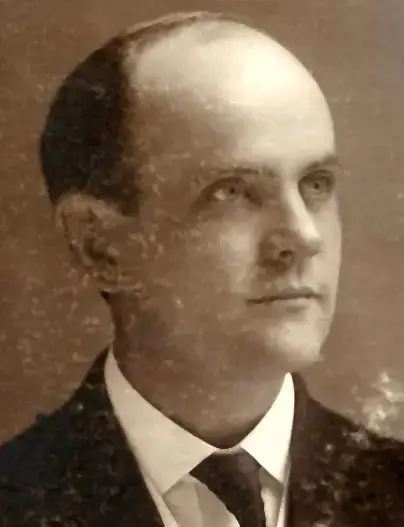
Meet M.E. Dodd
Hello there, I am Merrill Elam Dodd, but most folks just call me M.E. Dodd. I’ve had the great privilege of serving as a pastor, leader, and advocate for the mission of the Southern Baptist Convention. Born on September 29, 1878, in Belton, Texas, I was raised with a heart for ministry and a calling to serve God’s people.
My journey began with a strong foundation in education. I attended Baylor University and Southern Baptist Theological Seminary, where I deepened my understanding of Scripture and the church. These experiences prepared me for what would become a lifetime of service and leadership in God’s kingdom.
I’ve had the honor of pastoring several congregations throughout my life, but I am perhaps best known for my time as pastor of First Baptist Church of Shreveport, Louisiana, where I served faithfully from 1912 to 1952. Under my leadership, the church grew not just in numbers, but in its commitment to missions, discipleship, and stewardship. Together, we built a church community that became a model for others—a beacon of what God’s people can achieve when united in His purpose.
My passion for missions and ministry didn’t stop at the local level. I was deeply involved in the work of the Southern Baptist Convention, and I’m proud to have played a significant role in the development of the Cooperative Program, which was adopted in 1925. This unified giving plan revolutionized the way Southern Baptists supported missions and ministries. By pooling our resources, we were able to send more missionaries, support more ministries, and do more for God’s kingdom than any one church could do alone. For this work, I have been called the “Father of the Cooperative Program,” a title I wear with humility and gratitude.
In 1934, I had the privilege of serving as the president of the Southern Baptist Convention, a position that allowed me to advocate for missions, stewardship, and the unity of our churches. I also had the joy of speaking and writing about these subjects, sharing my heart for God’s work and encouraging others to join in the effort.
Stewardship has always been close to my heart. I believe that every church member has a role to play in supporting the mission of the church, and I’ve spent much of my life teaching and encouraging systematic, sacrificial giving. It is through this collective effort that we can advance the gospel and meet the needs of a hurting world.
Beyond the work within the SBC, I’ve always had a passion for global missions. The Great Commission calls us to make disciples of all nations, and I’ve dedicated my life to seeing that call fulfilled. Whether through supporting missionaries or equipping the local church, I’ve always believed that our work must extend far beyond the walls of our buildings.
My time on this earth has been dedicated to one simple goal: advancing the kingdom of God through the local church. From my work at First Baptist Shreveport to my contributions to the Cooperative Program and my leadership in the Southern Baptist Convention, I have sought to serve faithfully and to leave a legacy that reflects God’s love and mission.
As I look back on my life, I am humbled by the opportunities God has given me to serve Him and His people. I am grateful for the many individuals and churches who have joined me in this journey, and I pray that the work we’ve done together will continue to bear fruit for generations to come. Thank you for allowing me to share a bit of my story with you, and may God bless you as you seek to serve Him in your own way.
L.R. Scarborough
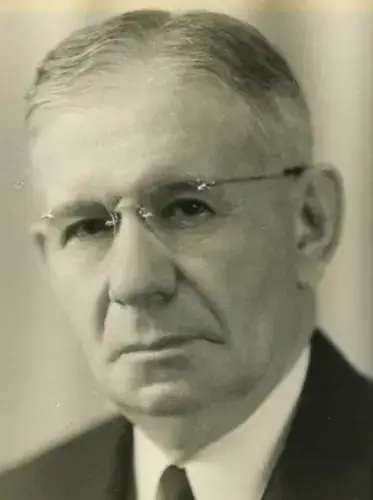
Meet L.R. Scarborough
Greetings, friends! I am Lee Rutland Scarborough, though many know me simply as L.R. Scarborough. I was born on July 4, 1870, in Colfax, Louisiana, a fitting day for someone who would dedicate his life to proclaiming freedom in Christ. From an early age, I felt the stirrings of God’s call, though it took time and experience for me to fully understand the ways in which He would use me for His glory.
I was blessed with a rich education, beginning at Baylor University and continuing at Southern Baptist Theological Seminary. These institutions shaped my understanding of Scripture and deepened my commitment to the gospel. God’s call led me into the pastorate, where I served several churches in Texas, but my path soon turned toward training others to fulfill the Great Commission.
In 1908, I became one of the first faculty members of Southwestern Baptist Theological Seminary in Fort Worth, Texas, at the invitation of its founding president, B.H. Carroll. Later, in 1914, I succeeded Dr. Carroll as the seminary’s president, a role I held for more than two decades. It was my joy and privilege to equip young men and women for ministry, teaching them to be both passionate evangelists and faithful stewards of the gospel.
Evangelism has always been at the heart of my ministry. I believed then, as I do now, that every Christian is called to be a soul-winner. I traveled extensively, preaching revivals and teaching evangelistic methods to churches and pastors. Through my book, With Christ After the Lost, I sought to inspire believers to take up the mantle of personal evangelism with boldness and faith.
My passion for missions and evangelism naturally connected me to one of the greatest innovations in Southern Baptist history: the Cooperative Program. Established in 1925, this unified giving plan revolutionized the way Southern Baptists supported missions and ministries. I was a staunch advocate for the Cooperative Program, seeing it as a God-given strategy to mobilize resources for global missions, church planting, theological education, and more. By pooling our resources, we Southern Baptists could achieve far more together than we ever could alone.
I often reminded churches and individuals that the Cooperative Program wasn’t just about money; it was about obedience to the Great Commission. It was about making Christ known from the smallest towns in America to the farthest corners of the world. Every dollar given represented an act of faith, a step toward bringing someone, somewhere, into the kingdom of God.
Throughout my life, I sought to be a faithful servant, whether preaching the gospel to the lost, equipping students for ministry, or championing the Cooperative Program as a means to advance God’s mission. Though my earthly journey came to an end in 1945, I am humbled and overjoyed that my work continues through the lives of those I taught, the churches I served, and the ministries I helped to support.
If I could leave you with one encouragement, it would be this: Commit your life to the gospel. Be unrelenting in your pursuit of the lost. Support the work of missions through your prayers, your giving, and your personal witness. The Cooperative Program is a powerful tool, but it is only as effective as the faithfulness of God’s people. Together, we can reach the world for Christ, one soul at a time.
Bertha Smith
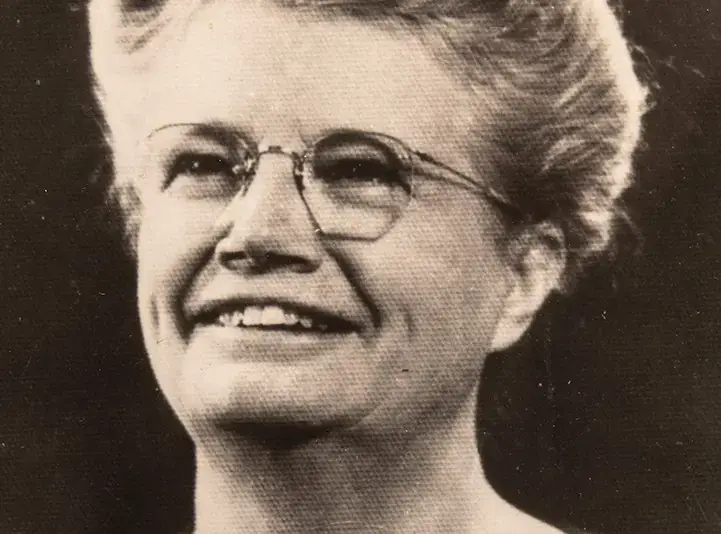
Meet Bertha Smith
My name is Bertha Smith, and I was born on November 16, 1888, in the small town of Cowpens, South Carolina. From the time I was a little girl, my parents taught me the importance of faith in Jesus Christ. At a young age, I committed my life to Him, never imagining just how far He would take me or how He would use me to share His love with others.
I grew up in a close-knit community where hard work and simple living were the norm. While life was humble, I always felt God had something special for me to do. I attended North Greenville Baptist Academy and later Furman University to prepare myself for whatever plans the Lord had for my future. It was during a prayer meeting that I felt God’s clear call to missions, and from that moment, my path became clear.
After further training at the WMU Training School in Louisville, Kentucky, I became one of the first women to be commissioned by the Foreign Mission Board in 1917. With excitement and a little fear, I boarded a ship for China, knowing that my life would never be the same. I trusted God to guide me, and He never failed.
My mission field was Shandong Province, a region full of people who needed medical care, education, and most importantly, the Gospel. Learning the language and culture wasn’t easy, but God gave me the strength and patience to persevere. Day by day, I worked to build relationships and show Christ’s love through teaching, evangelism, and even helping in medical ministries.
Perhaps the most remarkable part of my time in China was the Shantung Revival. In the late 1920s and into the 1930s, God began to do something extraordinary among the Chinese Christians and missionaries. It started with deep repentance, as people confessed their sins and surrendered fully to the Holy Spirit. The revival spread like wildfire, bringing new life to churches and communities. I was privileged to witness and participate in this mighty move of God. Through prayer, humility, and obedience, I saw lives transformed, families healed, and countless people come to faith in Christ.
After serving in China for over 40 years, my work there came to an end when the Communist government forced missionaries to leave in 1949. Although it was heartbreaking to leave the people I loved, I knew God’s work would continue. I retired from the mission field in 1958, but I never retired from sharing the message of revival and prayer. Back in the United States, I spent my remaining years encouraging Christians to seek God’s power through prayer, repentance, and faithful living.
I even wrote a book, Go Home and Tell, to share the story of how God worked through my time in China and to inspire others to trust Him completely. Over the years, I’ve spoken to countless churches and gatherings, always urging people to pray for revival and to obey God’s call, no matter where it leads.
Now, as I reflect on my life, I’m reminded of one simple truth: God uses ordinary people to do extraordinary things when they are fully surrendered to Him. I am nothing special, but my God is mighty and faithful. He took a young girl from South Carolina and allowed her to be part of His incredible work in China and beyond. To Him be all the glory.
Bill Wallace
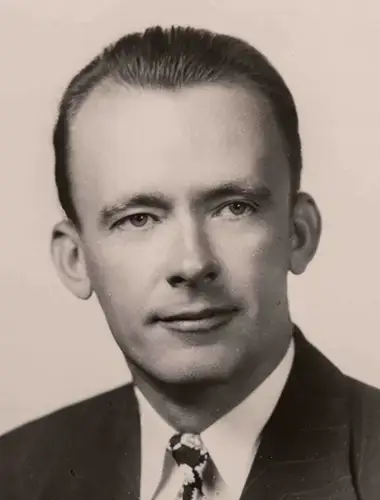
Meet Bill Wallace
My name is Bill Wallace, and I was born on November 4, 1908, in Knoxville, Tennessee. Growing up in a Christian home, I learned early on the importance of faith, service, and compassion. As a teenager, during a revival service, I committed my life to Christ. That decision shaped every step of my journey.
Even as a young boy, I felt drawn to medicine. Fixing broken things and helping others just felt natural to me. I pursued that passion, studying medicine at the University of Tennessee and completing a surgical residency. By the world’s standards, I had a promising career ahead of me, with the potential for a comfortable life. But something was missing—a deep sense of purpose. God was calling me to something greater.
That calling became clear in 1935 when I answered the Lord’s invitation to serve as a missionary doctor in China through the Southern Baptist Foreign Mission Board. Leaving home wasn’t easy. I loved my family and the familiarity of life in Tennessee, but I knew the people in southern China needed both medical care and the hope of the Gospel. I couldn’t ignore the call.
I arrived in Wuchow (now Wuzhou) and began my work at Stout Memorial Hospital. Life there was anything but glamorous. The hospital was often overcrowded and under-resourced, but it became a beacon of hope for the poor and the suffering. Each patient was an opportunity to show Christ’s love, not just through surgery or medicine but through kindness, prayer, and a listening ear.
The years that followed were filled with challenges—and blessings. World War II brought the Japanese occupation, and we faced constant danger. Yet, even in those dark times, God’s light shone through. People came to the hospital not just for healing but to hear about the Great Physician who could heal their souls.
As the war ended and China began to rebuild, a new storm arose: the rise of Communist control. The political climate grew increasingly hostile to foreign missionaries. Friends and colleagues urged me to leave, but how could I abandon the people God had called me to serve? I stayed, knowing full well the risks.
In 1950, the persecution intensified. Communist authorities accused me of being a spy, a charge as false as it was absurd. I was arrested and thrown into prison. The conditions were harsh, and the interrogations relentless. But in those dark, lonely moments, I leaned on the promises of Scripture. “For to me to live is Christ, and to die is gain” (Philippians 1:21). That verse became my anchor.
On February 10, 1951, I met my Savior face to face. The official report claimed it was suicide, but the truth is I was willing to lay down my life for the One who laid down His life for me. My earthly body was buried hastily, but the Chinese believers I’d served so long did not forget me. They marked my grave with the words, “For to me to live is Christ.”